
Why Australian visas get refused:
Most refusals are not random. They happen because the application does not meet legal requirements or does not provide clear, convincing evidence.
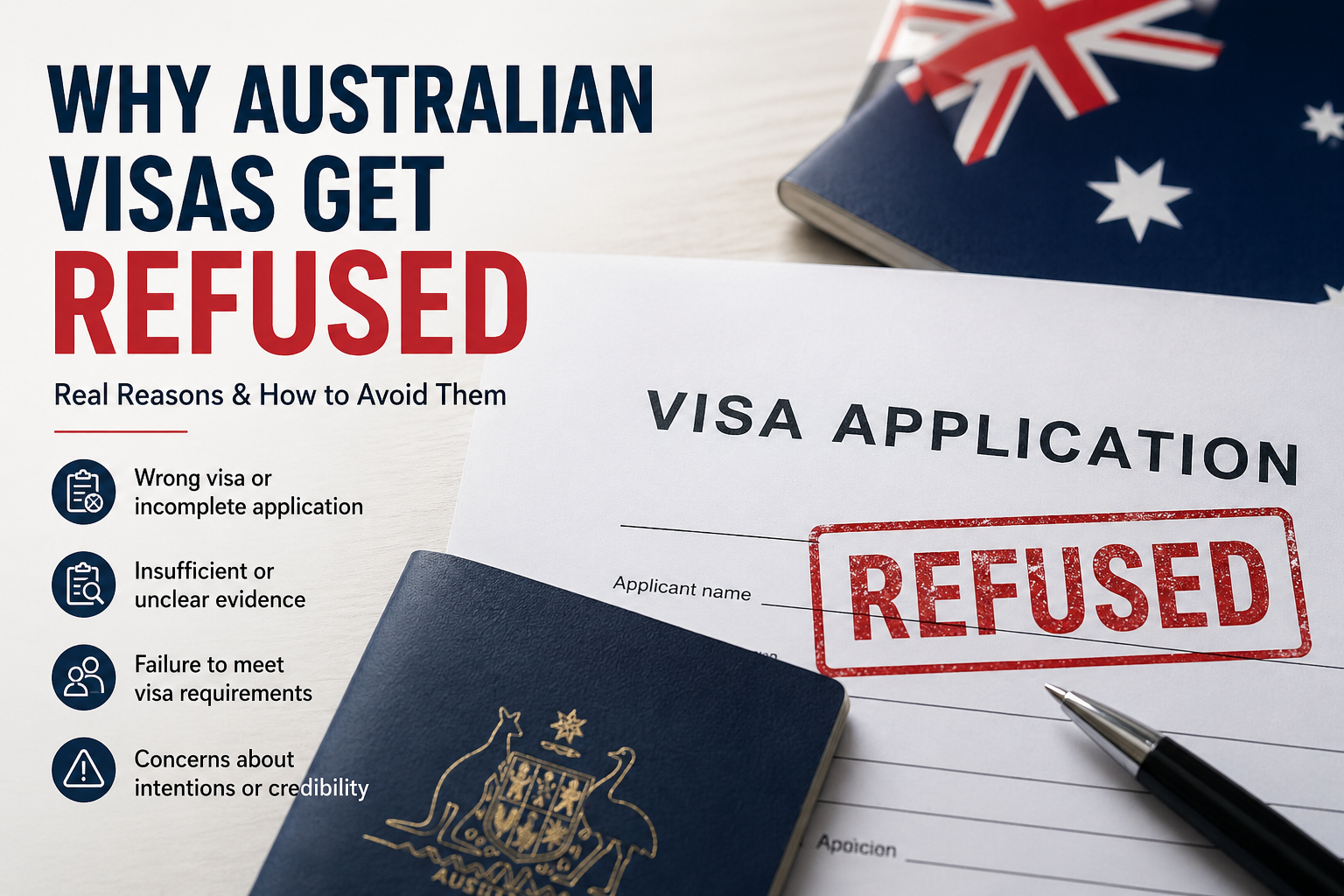
Many applicants believe that having documents is enough. It is not. The Department of Home Affairs looks at whether the application makes sense as a whole.
This guide explains why Australian visas get refused and how to avoid common mistakes before you apply.
Not sure if your application is at risk?
Visa refusals often come down to evidence, consistency, and strategy.
Why Australian Visas Get Refused
Visa refusals usually fall into a small number of patterns. Understanding these patterns can prevent costly mistakes.
- Weak or unclear evidence
- Inconsistent information
- Wrong visa pathway
- Failure to meet legal criteria
- Concerns about intentions or credibility
1. Applying for the Wrong Visa
One of the most common reasons visas are refused is choosing a visa that does not match the applicant’s situation.
For example, applying for a visitor visa when the intention is long-term migration can lead to refusal.
If you are unsure which visa is correct, compare all options here:
visa and immigration Australia.
You can check official visa requirements on the Department of Home Affairs website:
Australian visa list.
2. Weak Financial Evidence
Financial documents are not just about showing money. The Department looks at:
- Source of funds
- Consistency of bank statements
- Employment income
- Ability to support the stated purpose of travel
Unexplained deposits or inconsistent balances can lead to refusal.
3. Failure to Show Genuine Temporary Intent
For visitor and student visas, applicants must show they genuinely intend to stay temporarily.
This often fails where:
- There are weak ties to home country
- Employment is unclear
- Family or financial commitments are not evident
- The travel purpose does not match the evidence
See also:
visitor visa processing times
4. Inconsistent Information
Applications are assessed as a whole. If different parts of the application do not match, credibility becomes a concern.
- Different job titles across documents
- Conflicting dates
- Statements that do not align with evidence
- Missing explanation for unusual circumstances
5. Poorly Prepared Relationship Evidence (Partner Visas)
Partner visas are refused where the relationship is not proven clearly.
Common issues include:
- Limited financial evidence
- No clear household evidence
- Weak social recognition
- Generic or copied statements
Read more:
partner visa processing times
6. Skills Assessment and Occupation Issues
For skilled migration, the most common problems are:
- Wrong ANZSCO occupation
- Skills assessment does not match experience
- Work experience not recognised
- Points claimed incorrectly
See:
Australia skilled occupation list
7. Health and Character Issues
Applications may be refused if:
- Health requirements are not met
- Character concerns exist
- Previous immigration history is problematic
Full disclosure is critical. Failing to declare issues often causes bigger problems than the issue itself.
8. Further Assessment and Delays Before Refusal
Many applications go into “further assessment” before refusal.
This means the Department is reviewing the application more closely.
At this stage, weak evidence is more likely to lead to refusal.
See:
what further assessment means
Most refusals are preventable.
The issue is rarely a single document. It is how the application is presented as a whole.
How to Avoid an Australian Visa Refusal
- Choose the correct visa
- Prepare a clear and consistent application
- Explain anything unusual
- Provide strong supporting evidence
- Do not rely on templates
- Ensure documents match your claims
What to Do If Your Visa Is Refused
If your visa is refused, do not immediately reapply.
You should:
- Read the refusal reasons carefully
- Identify the exact issue
- Decide whether to appeal or reapply
- Fix the problem before lodging again
Understanding why Australian visas get refused can prevent costly delays, refusals, and repeated applications.
Read more:
visa appeals and review options
Related Visa Refusal and Delay Guides
- Further Assessment Australia Visa
- Australia Visitor Visa Process Time
- Australia Visitor Visa Duration
- Visa Appeals Australia
- Australian Visa Information Hub
Australian Visa Refusal FAQs
Can I apply again after a refusal?
Yes, but you must fix the issue that caused the refusal.
Does a refusal affect future applications?
Yes. Previous refusals must be declared and can affect future outcomes.
Is it better to appeal or reapply?
This depends on the visa and the reason for refusal.
Ready to Avoid a Visa Refusal?
Visa refusals are usually avoidable if the application is prepared correctly from the start.
If you want a clear assessment of your situation before applying, start here: